iPaulina
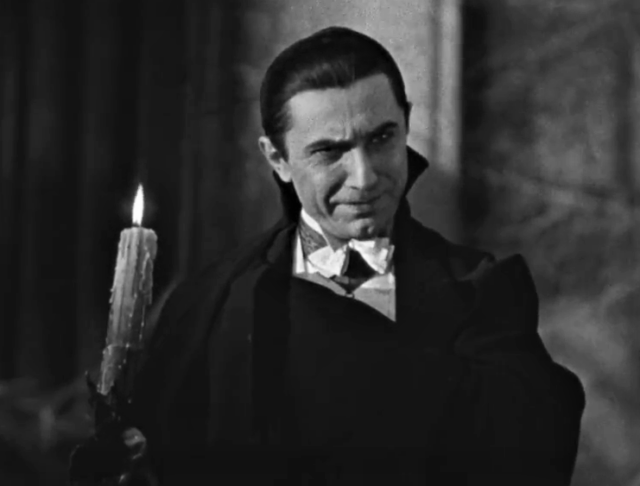
The modern vampire
The vampire figure recurs throughout Western culture and persists even today. ‘What! Is it in our eighteenth century that vampires exist?’ Voltaire asked in 1764, in Dictionnaire Philosophique. He, like Marx over 100 years later, saw the vampire reincarnated in the form of exploitative businessmen.As Voltaire put it, ‘There were stock-jobbers, brokers, and men of business, who sucked the blood of the people in broad daylight; but they were not dead, though corrupted. These true suckers lived not in cemeteries, but in very agreeable palaces.’ The vampire of preceding generations lived on, and had changed its diet with the trends, this time living off labour rather than blood. Marx names this new vampire as Capital, which ‘only lives by sucking living labour, and lives the more, the more labour it sucks.’ He also saw the vampire in ‘blood-sucking institutions’ such as the exploitative agricultural and domestic industries. But surely now the vampire must be dead? And yet, being perpetually undead, it should be no surprise that the vampire has indeed risen again. ‘What! Is it in our twenty first century that vampires exist?’ you may well ask.
The vampire has, it seems, chosen to expand its diet, as it sucks not only creativity, but also individuality and originality from art and writing. AI has had a remarkable effect on society as whole, its influence leaving no profession undisturbed, and no discourse free from that acronym. People willing to consume AI-generated media cause a lack of demand for content created by humans and encourage satisfaction at generally mediocre art or writing that has just come out of ChatGPT. Prevalent use of AI sucks creativity from society as a whole, placing value on creating an end product that that is just about good enough to do the job. Its usage devalues human creation and makes people feel comfortable to rely further on AI; if Bram Stoker were alive today, he might remind of us of a line from his famous novel: ‘For all that die from the preying of the Undead become themselves Undead, and prey on their kind.’
AI is trained by being fed vast amounts of data, from which it can predict the most likely word to follow the last, which it gives it the unique ability to be both unoriginal and unreliable. The hand-made content it is trained on is, metaphorically speaking, killed, and comes back to life as a pale imitation of what came before. Sounds like a vampire to me. It is strongly reminiscent of Lenore, one of the most influential ballads of early vampire literature that describes the story of a woman who wants her husband back from war, but gets a clearly inadequate, vampire-like version of him instead: much like how the output of ChatGPT is an inadequate substitute for genuine human creativity. If art is an expression of human experience, what made anyone think that a machine would be able to do it?
Furthermore, AI is reliant on data from humans: how will it be able to copy content with no content to copy besides its own? Vampires rely on the blood of preexisting humans to survive, and AI eats creativity in much the same way: Stoker describes Dracula as a ‘life-eating maniac’, in contrast to Lucy who is ‘full of life’. As the media tends to forget, there are in fact other and earlier vampires than Dracula. For example, Carmilla is a vampire who can only go by variations of her name: she appears as Carmilla, Millarca, and Mircalla, just as how AI is only able to create variations and combinations of things that already exist, inherently unable to come up with anything original. So, if your goal is an answer, and there is a correct answer, AI might be able to help. If the answer is no to either of these questions, I can’t help but reach for my garlic, wooden stake and holy water.
Matilda (VII)
Image credit: Wikimedia Commons, Public Domain

What relevance can the Magna Carta hold for us today?

Ethical issues of using AI in the IVF embryo selection process

Was Euripides a misogynist? A dive into his characters of Electra and Clytemnestra

The importance of sport in ancient civilisations

‘Two Jabs’: John Prescott’s politically defining moment

The reasons behind the revival of vinyl

The digital divide and AI in education
