iPaulina
The impacts of space exploration
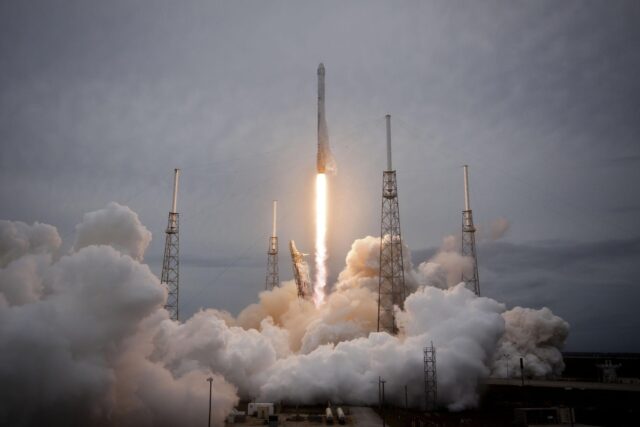
Space exploration truly kicked off in 1957, when the Soviet Union launched the first artificial satellite, Sputnik 1. Four years later, in 1961, Yuri Gagarin became the first human to orbit the Earth on Vostok 1. Since then, many inventions and discoveries related to space exploration have revolutionised and greatly improved life on Earth. Examples of these include water filters, ear thermometers, scratch-resistant lenses, shoe insoles, and smoke detectors.Almost every space-related invention has either indirectly or directly enhanced the way we live. However, these pioneering innovations come at a cost that some say is greater than the benefits. To reach orbit, powerful engines are required to provide thrust. This means that rockets need vast amounts of energy and use tonnes of fuel as a result. As such, there is currently a lot of debate regarding the benefits of space exploration and whether they outweigh its negative impact on the environment.
There are many advantages that the space industry has brought to society in general, as well as to scientists and companies. Technologies developed for space missions have led to advancements in fields like medical imaging, telecommunications, and material science. We have space exploration to thank for Wi-Fi, mobile phones, and mobile data, as without satellite systems in place for telecommunication, the almost instantaneous microwave transmissions required would not be possible. These satellites are also behind digital map software like Google Maps, Waze, and Apple Maps. As well as this, everyday items such as memory foam, scratch-resistant lenses, and water purification systems originated from space research. For example, memory foam was invented by NASA-funded researchers who sought a way to keep pilots cushioned during flights and hard landings.
Moreover, space exploration greatly increases and enhances scientific knowledge, which often benefits other fields, such as medicine and agriculture. Satellites provide valuable data for weather forecasting, climate monitoring, and natural disaster management. Space exploration has also expanded our knowledge of the cosmos, including the formation of stars and planets, the nature of black holes, and the potential for extraterrestrial life. This has allowed us to answer some long-pondered questions surrounding how our planet came to be. Furthermore, the space industry has many economic benefits: it has created jobs and spurred economic growth, with commercial space ventures opening new markets and opportunities. In fact, this is just the beginning! There are still many untapped areas of space exploration, including space mining, which could provide access to resources that are scarce on Earth.
On the other hand, despite the myriad of benefits that the space industry has brought us, there are many concerns regarding the environmental impact and sustainability of space exploration. In a world inundated by societal issues, why not focus on us, rather than spending money on space exploration? Rockets are incredibly expensive, resource-intensive, and are often single-use. A single launch can cost hundreds of millions of US dollars, and many argue that such vast quantities of money, resources, and labour should be spent improving life on Earth.
Still, as mentioned before, innovations and advancements are made every year that greatly improve our understanding and consequently treatment of our planet. Satellites help monitor deforestation, pollution, and other environmental changes, providing critical data for conservation efforts. These data also aids climate research as space-based observations contribute greatly to our understanding of climate change and support efforts to mitigate its impacts. These positive impacts highlight the value of space exploration as a driver of innovation, knowledge, and global progress.
Nevertheless, it is crucial to ensure that we are exploring space in a sustainable and climate-conscious way. For example, non-functional satellites that result in fragments and debris being left in space could pose risks for future missions. A solution to this, beside only investing in responsible launches, would be satellites that can observe, characterise, and remove debris in orbit, such as the satellites produced by the Japanese company Astroscale. Another concern is that rocket launches release large quantities of greenhouse gases and other pollutants into the atmosphere. Some of these rocket propellants can harm the ozone layer, which protects the earth from harmful ultraviolet radiation. The concern surrounding this issue has inspired the production of environmentally friendly fuel, such as Ecosene, by a company called Skyrora. Skyrora uses a low temperature process to develop the rocket fuel through methods that are as ecologically conscious as possible. This lowers CO₂ emissions by up to 70% compared to traditional methods of fuel production.
Overall, despite the environmental concerns and challenges that accompany space exploration, it has brought about numerous positive impacts that have truly benefited and enhanced our daily lives. Therefore, I personally believe that environmentally conscious space exploration is both possible and achievable.
Marissa (LV)

Korean moon jars: history and symbolism

The science behind altitude training

Should we scrap the House of Lords?

Simone Biles

Athletes as role models: responsibilities and pressures

The modern vampire

What relevance can the Magna Carta hold for us today?
