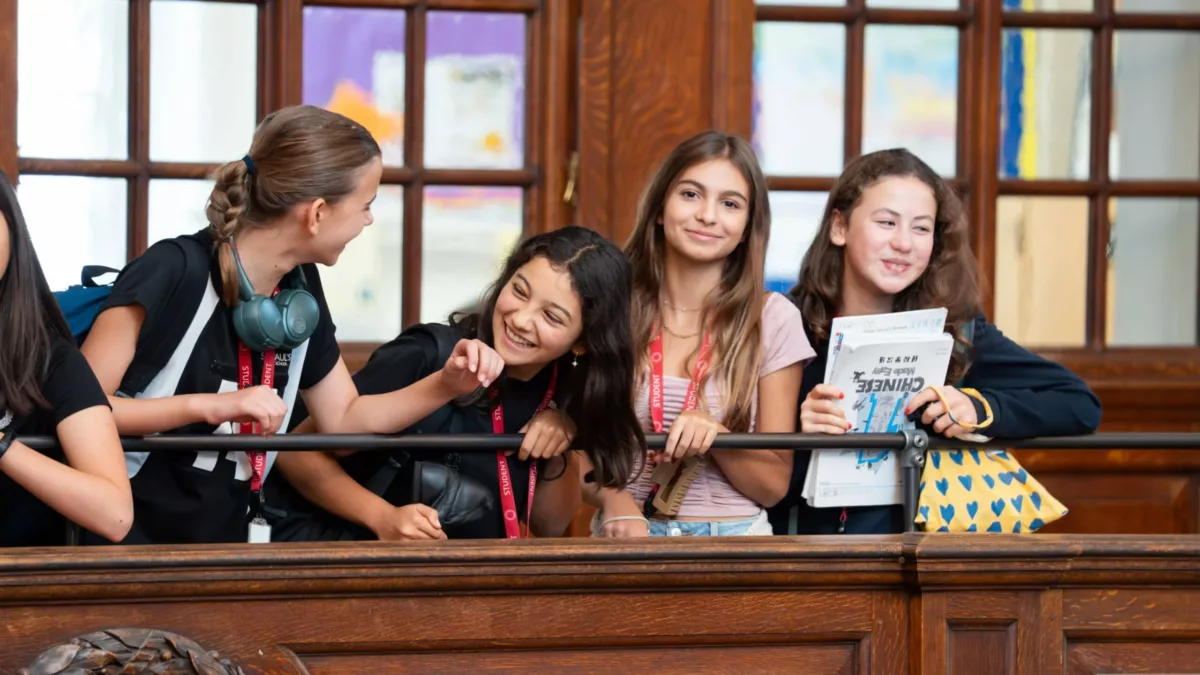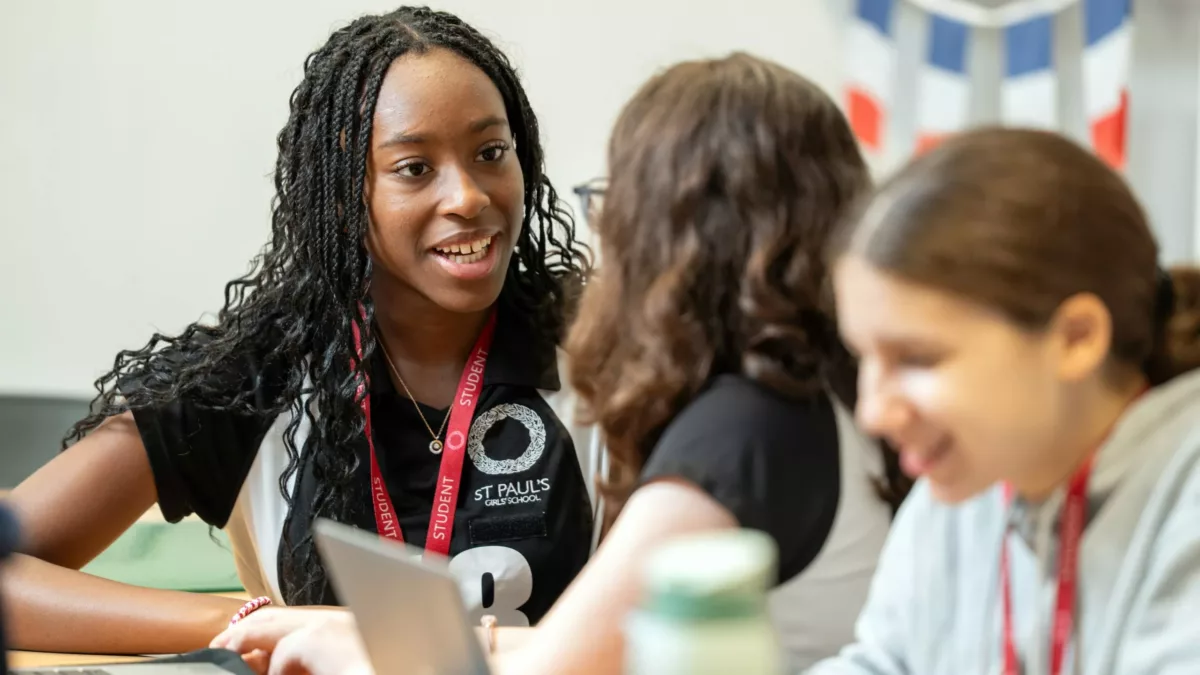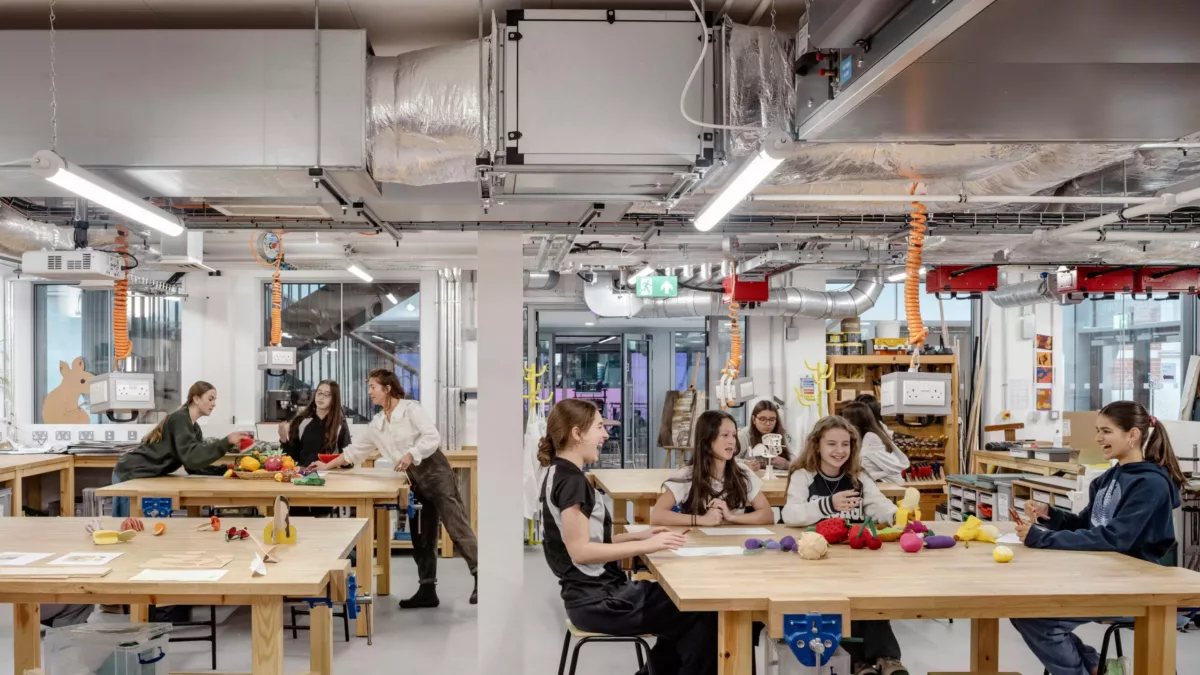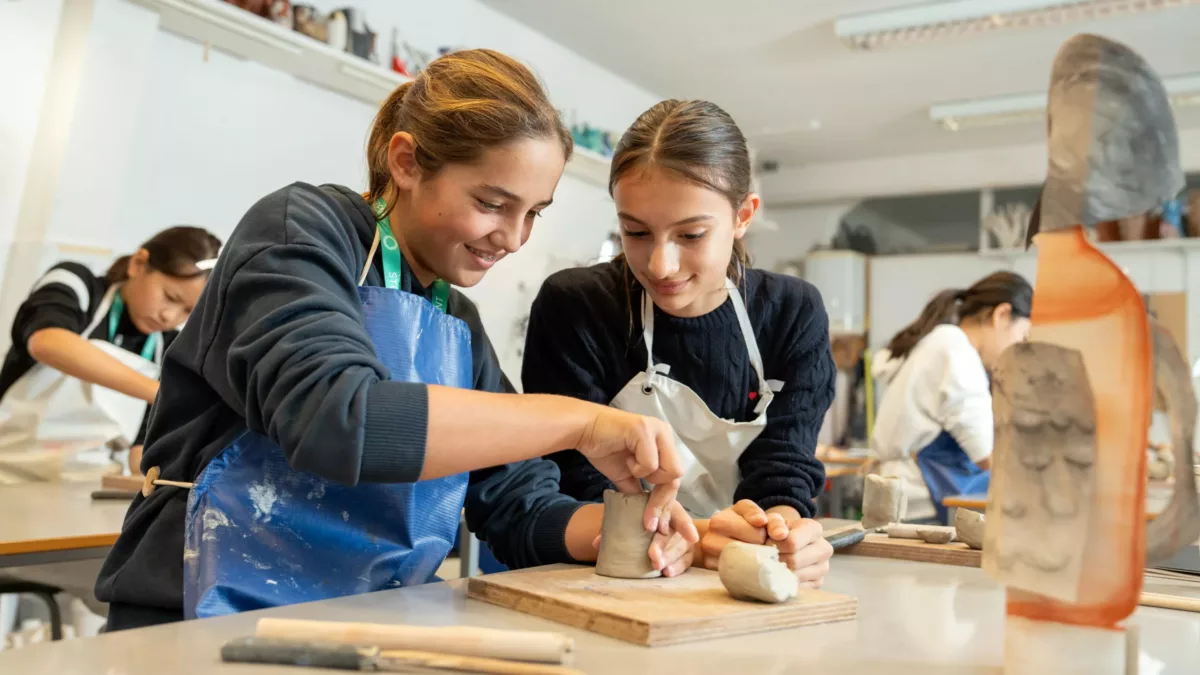
There is no typical Paulina. Every student brings her own talents, interests and perspective, united by a shared love of learning and supported to thrive within a warm and intellectually curious community.
Our 11+ admissions process is designed to identify natural ability, curiosity and potential. We welcome students from a wide range of backgrounds and schools, and aim to create an environment where girls feel challenged, supported and excited by learning both inside and beyond the classroom. We value the diversity of our student body and welcome applications from students with SEND.
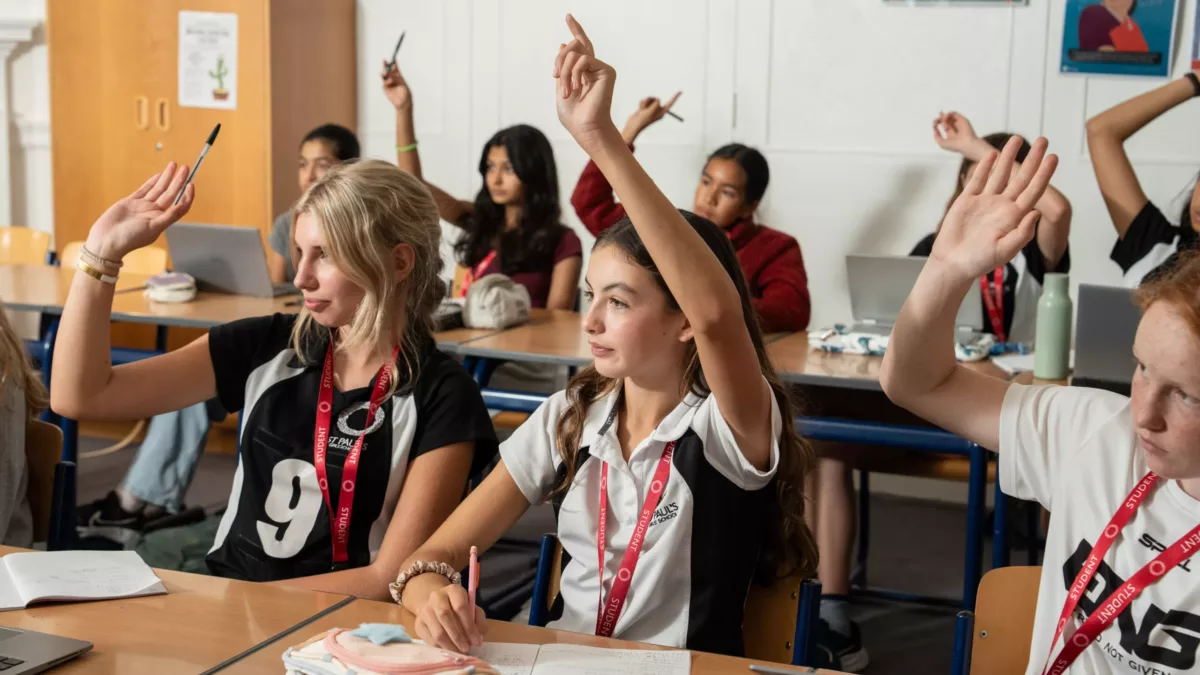
The Lower School years are about far more than settling in. They are a chance for students to explore ideas, form lasting friendships and grow in independence within a lively community of learning. We are proud to support every girl as she begins to find her own voice and passions.
We know that the examination entry procedure can feel daunting, but we aim to make it as clear and straight-forward as possible. The information published here is intended to outline the process and provide examples of possible examination material. However, the sample papers are intended as guidance only and it should be noted that the format of the papers may change year on year.
It is not necessary for students to spend lots of time practising or preparing material for these exams. We are looking for candidates to respond intuitively, and so would encourage students to relax, try their best and enjoy engaging with the material.
If your child requires access arrangements for the entrance examinations due to a special educational need or disability, please indicate this on the application form. We will contact you to learn a little more about your child’s needs and discuss the current arrangements they have in school. We will talk through options for arrangements we can put in place at each stage of the admissions process.
Parents are required to submit an online application form, together with a copy of the candidate’s passport, visa (if applicable) and a non-refundable registration fee of £265 (not applicable for those families applying for a bursary only place).
Parents will be able to indicate on the application form if they would like to apply for a bursary on the grounds of financial need. There is also the option to apply for a music scholarship.
Late applications will not be accepted.
Please register your interest via the enquiry form for September 2027 entry. Applications will open in June 2026.
The dates for our entrance process are subject to change dependent on governmental guidance at the time. We will endeavour to give parents and guardians as much notice of any changes as possible.
All candidates are required to complete the ISEB Common Pre-Test, a computer-based, time-limited adaptive assessment designed to identify academic potential across verbal reasoning, mathematics, and non-verbal reasoning.
Candidates may sit the test at an approved ISEB testing centre, at their current school (if it is an ISEB centre), or on site at St Paul’s Girls’ School on Monday 16 November or Tuesday 17 November 2026.
Parents will be informed of the outcome of this stage in late November. At this point, we will also request a confidential reference from the candidate’s current school.
All candidates who are successful after the first stage assessment will be invited to sit our entrance examinations in English, Mathematics, and General Comprehension at SPGS. Shortlisting for interview will be based on performance in these examinations, alongside the ISEB Common Pre-Test results.
Please note that, unfortunately, we are unable to offer alternative dates for the written assessments.
Candidates will sit three written papers in Mathematics, English, and General Comprehension.
English
The English paper involves the close reading of a passage of literary prose. Candidates are asked to answer up to six questions on the passage. Some will involve the extraction of information, some will ask for comment on the implications and effects of individual words and phrases. Candidates will be assessed for technical accuracy; grammar, punctuation and control of sentences will carry more weight than spelling. We are particularly interested in signs of genuine enjoyment and engagement, together with careful inference and sensitivity to linguistic effects. There is no separate creative writing section in the paper; however, the final question will always give candidates an opportunity to demonstrate that they can write with imagination and flair. Although we like to see evidence of a wide vocabulary, there is no need to learn and use unusual or obscure words.
11+ English Sample Reading Passage 2027
Mathematics
The mathematics paper comprises of a mixture of questions which are designed to identify potential. The paper has two sections. The first section will feature questions that are fairly straight-forward ‘sums’, designed to establish whether fundamental arithmetic concepts are in place and then questions which are more problem-solving in style. The second section will have multi-part questions; these questions will test a student’s ability to assimilate new ideas and put them into practice.
The questions will be based upon a range of topics all of which are part of the National Curriculum up to KS2. We are not just testing techniques, but also looking for insight.
It is very important for candidates to show their working out. A wrong answer cannot be given any credit if it is not supported by working. The questions are designed to be interesting and sometimes amusing, and we hope the students find sitting the paper an enjoyable experience.
We have included two sample papers, please note that students will only sit one paper on the day.
11+ Mathematics Sample Paper 1 2027
11+ Mathematics Sample Paper 2 2027
General Comprehension
The general comprehension paper is based around a theme and is designed to test comprehension in its broadest sense. This includes the skills of deduction, inference, extraction and organisation of information as well as evaluation, comparison, identification of patterns and links, and logic. No prior knowledge is required, although the KS2 scientific enquiry skills may be needed in the evaluation of material and presentation of data.
We are looking for ability to respond to a range of materials, which could be visual, numerical or written, and through comprehension, be able to draw pertinent conclusions about them. Above all, we are looking for students with the potential to react perceptively to a range of stimuli. Many candidates enjoy this unusual paper very much.
Following success in the entrance examinations, candidates are invited back to SPGS for an interview on an allocated date in January.
The interview will last approximately 20 minutes and will be conducted by one member of senior staff. We are looking for evidence of creativity, engagement and the capacity for independent thought.
The final decisions will be sent out to parents via email. Our final decisions will be based on how the candidates perform across the three stages of the admissions process (Pre-test, written assessments, and interview). We will also request a pupil reference from all candidates current schools which will also be taken into consideration in our decision-making process.
Acceptances to offers of a place need to be with the school by the deadline stipulated on the offer, together with a deposit of 50% of a term’s fees, although reduced deposits apply for successful bursary candidates. An additional overseas deposit is required if one or more of the persons who are jointly and severally responsible for paying the fees is resident outside the United Kingdom.
In the Summer Term we will start to send out information about joining our school to parents and students, including invitations to a welcoming first event for new MIV (Y7) and their parents which is an afternoon Tea in late June.
In the summer term, we will begin to send new joiner information, including invitations to welcome events for the incoming MIV (Y7) and their parents.
-
We offer a number of means-tested bursaries per year; the maximum value awarded is the full published fees. Detailed information is available on our bursaries page. We also offer 11+ music scholarships; details are available on our fees and scholarships page.
-
Students are required to live within a 50-minute commute of the school and we may decline to pursue an application where, in our opinion, it may require an unrealistically demanding journey for the student. Further details are available in our Admissions Policy.
-
St Paul’s is a day school with no boarding facilities available, which means we are unfortunately unable to accommodate overseas students. It is our school policy that all students must live in London with their parents for the duration of their education. We would expect students to be covered as a dependant on a parent’s visa status as we do not sponsor Tier 4 visas for entrants.
-
We do not offer student sponsorship at the point of admission. Applicants are required to have their own right to reside and study in the UK. This may be in the form of a dependant on the parent’s visa.
-
Several pupils join us each year from overseas and your application is most welcome.
For 11+ entry, students may take the ISEB common pre-test at any ISEB testing centre worldwide. Written assessments can only be taken in-person onsite. Interviews can be conducted remotely, and we will try to schedule them at a convenient time for your time zone.